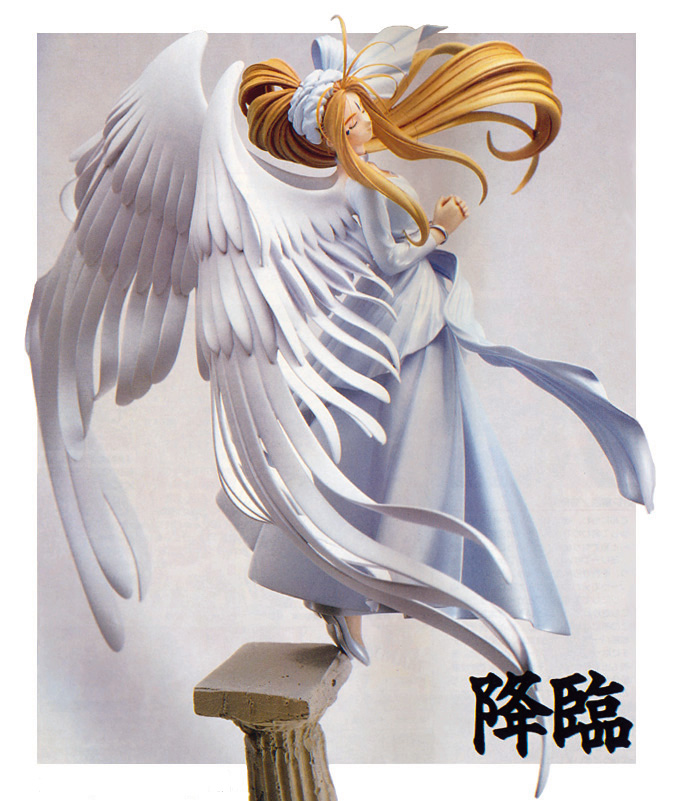
 Anime
(pronounced "ah-nee-may") is a Japanese loan word either taken from the
French or English word for animation, depending on the source you chose
to believe.
Anime
(pronounced "ah-nee-may") is a Japanese loan word either taken from the
French or English word for animation, depending on the source you chose
to believe.
Anime vs Manga * The Anime Genres * A Look At Hentai * The History of Anime
THE DIFFERENCE BETWEEN ANIMES AND MANGAS
What exactly is an Anime?
Anime
(pronounced "ah-nee-may") is a Japanese loan word either taken from the
French or English word for animation, depending on the source you chose
to believe.
The Japanese use the word Anime for any animation regardless of origin, whether it be Japanese, American, British, Czechoslovakian or any other kind of animation.
"Western Fans" use the word anime to describe Japanese Animation and no other.
Unlike western cartoons Japanese animation is aimed at a different audience and appeals more people than just children, as a result there is a huge amount of anime available covering a large amount of topics and issues, with a wide selection of genres.
Because Japanese censorship laws are different from many other countries some anime is incredibly violent, this is only one end of the scale at the other anime is incredibly cute.
Japanese animation is normally of a very high quality, often the characters
are well developed and the story lines are written to a high standard.
Anime normally has superb design, with vehicles, buildings robots and weaponry
being very detailed. Of course like television programmes not all
anime is well produced there is a large amount of anime that lacks quality
of any kind. Most anime stories originate from manga.
What is the difference with a Manga?
Manga is the Japanese word for comic book, in Japan millions of people read and enjoy manga.
Manga is published annually normally weekly or monthly, the size of a manga book can vary from the size of a normal comic book to the size of a phone directory!
In the western world anime is often confused with manga, this is mainly
because of Manga Entertainment and its marketing.
 |
 |
 |
 |
In Anime there are two broad classifications: shoujo (girl's) stories, and shonen (boy) stories. There are also two other classifications of these as well: ledisu (ladies, or young women's) stories, and seinen (young men's). Shoujo and shonen target a younger audience, and ledisu and seinen target an older audience.
Within these broad categories there can be a lot of overlap and other elements included; such as Adventure, Comedy, Drama, Fantasy, Giant Robots, Horror, Magical Girls, Romantic Comedy, Science Fiction, Shoujo Drama, and Sports drama... -just like in regular movies.
Below are a list of some of the most famous genres of anime:
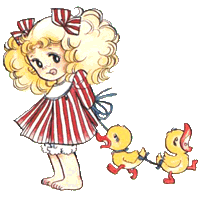 Shoujo
Targetted at girls of the age group of junior to high school girls.
They usually concentrate on romantic development of characters mixed in
with a few other sub plots as well. Also mainly, the main character is
always a girl and the plot focuses on their everyday life. A few examples
are SailorMoon, Fushigi Yuugi, or Marmalade Boy.
Shounen
Targetted at guys of the age group of junior to high school. They usually
focuses more on action and fighting with a little emphasis on character
development as well. These type of manga/anime are usually not so emotionally
involving but the action clearly makes up for the loss in romantic development.
A few examples are the breathtaking Rurouni Kenshin and Blade
of the Immortal.
Seinen
Revolves around a hobby or workplace thus placing more of a realistic
feel to readers.
Mecha
A general classification for any sort of large, fighting robots.
Cyberpunk
Focussed on technology and human beings, it paints a (sometimes dismal)
picture of the future.
Sentai
Team fighters. A good example would be the Sailor Senshi
or Power Rangers.
Yaoi/Slash
These genre usually attracts more female readers than male due to the
fact that the story focuses on the relationship between two males or more
(either love or sexual). However, some Yaoi/Slash take the relationship
so far that they lead to rape of a male by another male.
Hentai
Hentai is the japanese word for pervert which loosely translate into
pornography when connected with anime/manga. However, some have a decent
storyline like End of Summer but usually the storyline is just an
excuse for mindless sex just like those in real life pornography.
Etchi (aka ecchi)
Japanese for "perverted" sexually. It is derived from the first
letter of Hentai (the 'H'). Of the 3 terms which mean "perverted"
or "sexual naughtiness" (Hentai, etchi, and sukebe), it is usually the
most mild sorts of perversion. Such as looking at a chest in a tight
sweater, or sneaking a peek at panties; cheesecake shots, if you would.
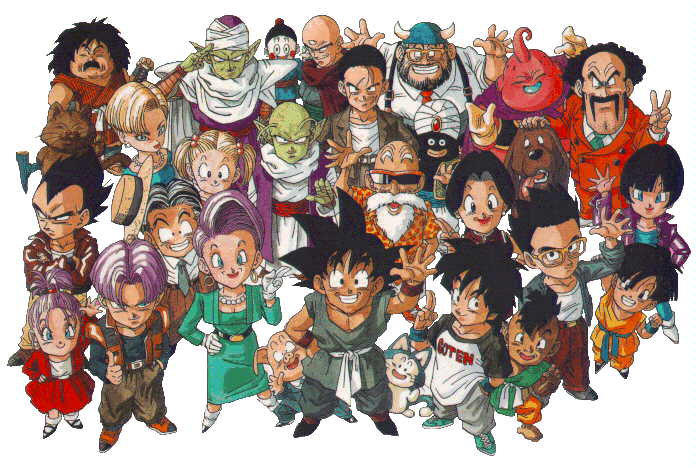
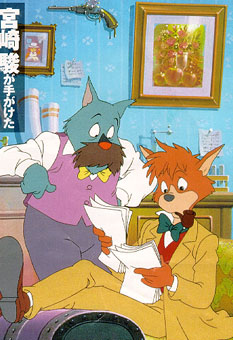
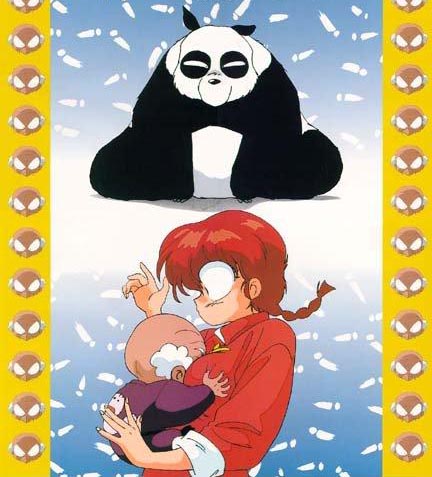
Hentai, which literally means "perversion," is a product of the multibillion-dollar Japanese animation industry, better known on these shores for such animated, G-rated favorites as Sailor Moon, My Neighbor Totoro and Kiki's Delivery Service, simplifies the L.A. Times. With the rise of the global Internet, the fantasy pornography of hentai has moved quickly to the U.S. and evolved into one of the more prevalent--and legal--forms of erotica. Today, hentai films can be easily bought online or through mainstream outlets, including Tower Records and Fry's Electronics, which stock small collections of the genre. Though such tame outlets don't carry triple-X videos with real actors, many of the hentai titles available at these locations are labeled: "All characters depicted in sexual conduct or in the nude are aged 19 years or older." That there is even a market for hentai in the U.S. underscores an economic reality in the triple-X world: as sexual imagery becomes standard fare of mainstream media, the exhibition market is crammed with competition. "At a certain point, what's different will sell," said Joe Giarmo, vice president of production at Van Nuys-based NuTech Digital Inc., one of the leading producers and distributors of Japanese animation, karaoke and hentai DVDs. Companies have rushed to draft American porn stars to dub hentai in English, an assignment few industry veterans will refuse. Still, when these actors and actresses review the tapes they will be working on, the fantastical acts they see shock even their jaded sensibilities. Many are taken aback by the success of their cartoon competitors.
In the classic series La Blue Girl, high school student Miko
Mido, spends her nights battling sex-crazed demons who, among other transgressions,
ravage her sister, a girls' volleyball team and, of course, the heroine
herself--who turns out to be a ninja with magical powers. Much of the strange
activity in hentai, assumed by critics to be purely for shock value, evolved
from artists who exploited loopholes in Japanese obscenity laws, said Jonathan
Clements, co-author of the Anime Encyclopedia. One 1918 code specified
that the adult "pubic area need not be hidden, but there should be no anatomical
details to draw the reader's attention." Instead of blocking artists from
creating pornography, illustrators and pornographers thwarted the law by
depicting sexual organs in shadow or outline. Body parts were colored blue
or green--signifying that they couldn't possibly be human--or were depicted
as part of a monster. And animators began drawing female characters that
looked like busty preteens--devoid of pubic hair, and thus theoretically
outside the boundaries of the regulation. To Western eyes, the characters
appear childlike. But to Japanese viewers, the distinction is not as clear.
Over time, the seduction or sexual violation of such girlish characters
evolved into a socially acceptable catharsis within the sexually repressed
Japanese culture, an exorcism of fantasy that is taboo in the real world,
according to author Helen McCarthy, co-author of "The Erotic Anime Movie
Guide." Aficionados of Japanese animation, known as "anime," say that the
high school uniforms and childlike faces are a standard convention of the
genre; a cultural fetish long established as merely fantasy. Just wearing
a school uniform is also no clear sign that the characters are underage.
Uniforms are worn at some junior colleges in Asia, and the girlish look,
known as the kawaii style, is favored by women well into their 30s.
March 1997 article by Clay
Welch
Motion begins with stasis.
It's a long walk from ancient Japan to Speed Racer. But that's where it all begins, with the artisans of early Japan, whose sense of aesthetic and affinity for the subtly dramatic lies beneath the anime, or Japanese animation, of today. You can see it in the calm stillness of a Japanese landscape; the philosophy of the East carried through their art then, and the thread continues through their animation today.
From antique landscapes, flash forward....
 ...
to the Twentieth Century. The modern-day analog to the bird's-eye-landscape
is the graphic novel, or manga. The sense of calm among a chaotic universe
translates from Eastern philosophy into these works beautifully; characters
are stoic and unless engaged in combat are rarely seen performing the flailing
gestures so common in Western comics. The logical progression from graphic
novel to animated feature might seem to put this sense of calm in jeopardy;
how, with motion, does one go about depicting stillness?
...
to the Twentieth Century. The modern-day analog to the bird's-eye-landscape
is the graphic novel, or manga. The sense of calm among a chaotic universe
translates from Eastern philosophy into these works beautifully; characters
are stoic and unless engaged in combat are rarely seen performing the flailing
gestures so common in Western comics. The logical progression from graphic
novel to animated feature might seem to put this sense of calm in jeopardy;
how, with motion, does one go about depicting stillness?
In 1963, Japan was only just recovering from the devastation of World War II. Heavily impressed and influenced by Walt Disney's characters with their large, expressive features, Japanese animators began by copying the western style. "Tetsuwan Atom," the story of a boy with an atomic heart, was among the very first of Japan's forays into a realm which in which they would shortly demonstrate great mastery.
Japan's success in their efforts at storytelling was so profound that Disney has been accused of actually stealing the story for The Lion King from a series created by Osamu Tezuka (also the creator of Tetsuwan Atom) which followed the adventures of Kimba, a small white lion with black ears. Disney denies any knowledge of the series, and, to some extent, of Japanese animation in general.
The charm of Tetsuwan Atom and the realistic interactions between the characters of similar early stories generated a following of Japan's first anime; this following is known as the fans of the First Wave of Japan-imation.
The Second Wave came speedily....
Though you may not know the name Ippei Kurei, it is highly probable that you know the product of his creativity--a bright-eyed, dark-haired, boy who drives like a demon as he guns his car around the track. Speed Racer, Racer X, Pops, Trixie, and the whole bunch belong to the Second Wave of anime to blossom from the Land of the Rising Sun. "Science Team Gatchaman", currently being rebroadcast as "Eagle Rider" in the states, was responsible for generating the Second Wave fans that Speed had failed to sweep in; this was the late 1960's, and animation would never be the same.
Also instrumental in lighting the Second Wave was Liegi Matsumoto and his Space Cruiser Yamato (broadcast here as Star Blazers).
Animators in Japan began writing for markets other than Science-Fiction afficionados; several programs were launched aimed specifically at adolescent girls. Examples today of this type of anime are Sailor Moon and the Dirty Pair (who, despite what their name and revealing clothing might suggest, are relatively acceptable for the average kiddo).
And through to the end of the 70's....
Captain Harlock: Space Pirate; Space Cruiser Yamato; Galaxy Express. These new offerings were filled with drama and well-told stories; throughout, there walked heroes, villains, and assorted characters who, though larger than life, still posessed a quiet calm that allowed them to face their foes with grim determination, attack obstacles with a smooth outer demeanor.
And then came the next milestone--a story about a robot called Mobile Suit Gundam. With an unparalleled example of character development and dramatic tension as well as wildly imaginative technological ideas, Gundam broke new ground in anime. It introduced the concept of the Newtype--a being more powerful and capable than an ordinary human, a gifted set of individuals upon whom the normal population depended for protection--from outside threats as well as from other Newtypes.
The Golden Age of Anime: the '80s....

The Macross Saga, known here by its series name Robotech, and
the soap-opera-ish Maison Ikkoku characterize this hightpoint in
anime. Macross, beginning with a surprisingly standard plot, found
great success because of the characters which evovle during the course
of the tale and also because of its amazingly detailed mechanical designs.
The transforming spacecraft/jet fighters/ fifty-foot-tall robot warriors
piloted by the likes of inexperienced but talented Rick Hunter and his
better-trained comrades are joined by a gigantic transforming battle fortress
from another world, battle valiantly against the giant Zentraedi and their
potato-shaped battle cruisers bent on conquering our Earth.
Maison Ikkoku, a spin-off of a highly successful anime comedy, ran through 90 episodes and dealt with interpersonal relationships, in particular the points of view of its two main characters. The changes which occur in these two are poignant and sequential--the series must be watched in order to be understood. This signifies an attempt to appeal to a mainstream, non-sci-fi, non-adolescent-girl, run-of-the-mill Japanese family member, perhaps well into an adult demographic. Anime was touching every aspect that television and film were.
The rise and fall of the OVA....
...or Original Video Animation. Understand that up to this point, the major animations which had been created were theatrical releases--and associated with the grandeur of presenting on the silver screen came the extraordinary expense. With the cost of producing and anime feature becoming increasingly prohibitive, it became evident that a cheaper way had to be found. It was.
The OVA was a radical concept based on the emerging technology of the VCR. Animations of between 40 and 90 minutes could be produced exclusively for video, costing much less to fund but earning approximately as much as a theatrically-released feature! It was the sudden flinging-wide of the gates on a whole mob of animators, writers, and producers who were long on creativity but short on cash. Soon there were OVA companies in every direction. It wouldn't last.
It was in the midst of this rush, around 1988, that Katsushiro Otomo released an anticipated work which until recently held tightly to the title of the highest-grossing anime ever produced; the name of the work was Akira.
Akira stands as a groundbreaking film in its flawless execution and engrossing storyline. Gainax, a group of animators and producers who concerned themselves more with creativity than marketability, produced two masterworks around this time as well: Otaku no Video and The Wings of Honneamis, both beautiful examples of creativity brought to fruition.
Despite these shinig examples, hoever, there unfortunately existed a
glut of less-than-stellar animation beginning to gather dust on retailers'
shelves. The marker had become saturated, and many talented animators turned
away from OVA production to work in television--a medium which demanded
more and paid less. The OVA had seen its boom; that was over now.
The Third Wave and what it means to humans.
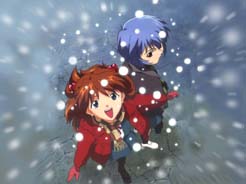
Into the 90's forged the animators, and it seemed to take them a couple of years to realize they had left their creativity behind. Animation houses were cranking out dreck, and it was being bought like crazy. A calm descended after the creative success stories of the late 80's began to fade in people's memories. And then the creative folks at Gainax scored a monster hit: Neon Genesis Evangelion. The story of Angels and underground cities, it was a great success. And this was followed in 1995 by the astounding realease from Manga in 1995: Ghost in the Shell. An amazing blend of 3D digital animation and superb traditional anime, this movie stands as the current state-of-the-art as far as anime goes, having stolen the title of highest-grossing anime from 1988's Akira.
It was at this point people in the US started actively showing an interest in purchasing anime movies and tapes. Anime videocassettes started appearing in conventions and hobby stores everywhere as high-selling items. Many other modern masterpieces were discovered by the growing fan base -- titles like Princess Mononoke, Battle Angel Alita, Neon Genesis, Evangelion and a host of others.
And now what?....
What will top this year's best, and next year's? Currently, there is
again a bit of a creative lull in the anime market. Soon, however, this
likely will change and a Fourth Wave may hit. With the trend in improving
quality as the decades pass, the next crop of anime promises to be truly
spectacular; stay tuned, folks. The ride is only going to get wilder.
|
||||||||||||